


07 / Sep / 2026
An honest update following the 2026 floods
Autumn 2026 is approaching, and understandably many travellers who have planned a trek in Nepal are asking the same question: Should we cancel?
Our answer is simple: don’t cancel your Nepal trip simply because of the recent floods. Nepal is a multi-region trekking destination, and while the recent floods have had a significant impact on the country—both in terms of loss of life and economic damage—the situation is not the same across every region.
Most of Nepal’s trekking and travel destinations are expected to be ready to welcome visitors this autumn. We have been continuously monitoring the situation in Tsum Valley and the Manaslu region, particularly the condition of the trails, roads, bridges, accessibility, and overall safety.
So far, Tsum Valley has not been significantly affected in terms of trekking accessibility and safety. Some access routes and infrastructure across the wider region have been affected, but the situation is being monitored closely, and conditions can change as restoration work continues.
Our priority is to keep travellers informed with real conditions rather than simply saying that everything is normal. We will continue to provide updates as the situation develops and make recommendations based on the conditions at the time of travel.
Nepal is still open. The mountains are still waiting. And your autumn 2026 adventure doesn’t necessarily need to be cancelled.
What happened in August and September 2026?
On 26 August 2026, a major flash flood in the Bhote Koshi River in Rasuwa caused significant loss of life and property. The Ministry of Home Affairs confirmed that the disaster affected riverbank areas in Rasuwa, Nuwakot, Dhading and Gorkha, with rescue, relief and damage-assessment operations following the event. [1]
This was a serious disaster, and it is important not to minimise it. Rasuwa is a neighbouring mountain district to Gorkha, and the disruption to roads and transport has wider consequences for northern Nepal tourism.
There was also a separate development in northern Gorkha. Following flooding and damage around the Budhi Gandaki corridor, the District Administration Office, Gorkha issued a public notice on 6 September 2026 asking travellers not to undertake trekking until further notice. [2]
That notice is important for anyone planning Tsum or Manaslu right now. It also does not, by itself, mean that the entire autumn 2026 season has been cancelled. It means the route needs to be assessed and cleared before trekking resumes.
So, should you cancel your autumn 2026 trip to Nepal?
Not necessarily. Nepal Tourism Board itself has said that while some parts of the country have been affected by the recent natural calamity, much of Nepal continues to live, work, travel and welcome visitors. In its 1 September 2026 statement, the Board said clearly: “Nepal is not closed.” [3]
That distinction matters. Nepal is a geographically diverse country. A flood in one river system does not automatically mean that every trekking destination, airport, road or town in Nepal is affected in the same way.
For autumn travellers, the sensible question is therefore not “Is Nepal safe?” in general. The better questions are: Which destination are you visiting? Which access route will you use? Has that route been inspected? And what is the latest advice from the local authorities?
Why October and November still matter?
October and November are traditionally among Nepal’s strongest trekking months. Nepal Tourism Board notes that around 80 percent of Nepal’s annual rainfall occurs during the June-September monsoon, while October and November generally bring clearer conditions after the monsoon. The Board identifies spring and autumn as the best trekking seasons in Nepal. [4]
This seasonal pattern is one reason the autumn trekking season remains important for mountain communities. Once the monsoon weakens, the persistent heavy rain that contributes to flash floods, saturated slopes and frequent landslides normally decreases. That does not eliminate mountain risk, but conditions are generally more favourable than during the monsoon itself.
For autumn 2026, however, the timing of recovery is just as important as the weather. Some roads, bridges and trails may still need repairs after the floods. That is why we will not treat October or November as an automatic green light for every route.
The real issue for Tsum Valley: access and route conditions
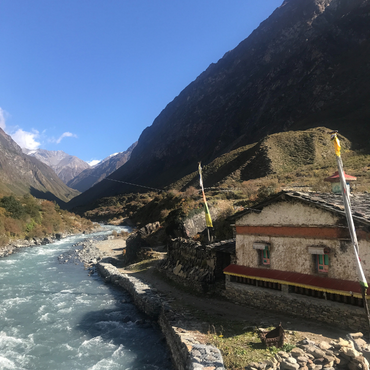
For Tsum Valley, the biggest question is not whether the valley itself has been severely affected or become inaccessible. The immediate concern is whether the roads, bridges, and trail sections used to reach and travel through the region are safe and operational at the time of your trek.
Our local teams are continuously monitoring the situation. So far, we have not seen any major disruption or safety concerns along the Tsum Valley trekking route itself. However, some highway sections have been affected by the recent floods, and the government is working to restore these routes as soon as possible. Where necessary, alternative access routes are also available.
At the moment, Manaslu is temporarily closed because if the recent flood in Namrung, but officials have indicated that the route is expected to reopen within the next few days.
Tsum Valley, however, remains safe for trekking, and the situation in the valley is stable.
What about the rest of Nepal?
It is equally important not to describe the whole country as a single disaster zone. The Ministry of Home Affairs identified Rasuwa, Nuwakot, Dhading and Gorkha among the districts affected by the 26 August flood. [1] Other trekking regions such as Everest, Annapurna, Kanchenjunga, Mustang and parts of western Nepal are geographically separate from that event and must be assessed according to their own local conditions.
Nepal Tourism Board continues to promote Nepal as a multi-region destination, and its current public messaging is that large parts of the country remain open to travel. [3] For travellers, this means that a disruption in one corridor should not automatically lead to cancellation of an unrelated destination.
What makes responsible trekking different this autumn?
This autumn is not the season to make big promises like “everything is 100 percent safe.” No responsible operator can guarantee that in a Himalayan environment, especially immediately after a major disaster.
What we can guarantee is that safety will come before schedule. If a road is not suitable, we will look for another practical option. If a trail section needs to be avoided, we will adjust the itinerary. If the authorities have not cleared a route, we will not operate it simply because a booking has already been made.
Our guides and porters are closely connected to the Tsum and Manaslu region and have years of experience travelling these trails. They understand the local terrain, villages, river crossings and seasonal conditions. Their experience is particularly valuable when conditions are changing because local knowledge can complement official information and route assessments.
Our trail leadership also includes high-altitude experience, including climbing experience on Mera Peak, Ama Dablam and 6,000-metre-class peaks. We specialise in Tsum Valley and the Manaslu Circuit, so our responsibility is not simply to take people on a trek; it is to understand the route well enough to make good decisions when circumstances change.
Why visiting Nepal this autumn can still matter?
There is another side to the decision that is easy to overlook. When a natural disaster affects mountain communities, the impact does not end when the water goes down. Guides, porters, lodge owners, transport operators, cooks, farmers and small businesses can all lose income when visitors stop travelling.
Nepal Tourism Board has made this point directly in its September 2026 “Nepal Calling” message: responsible visits can support livelihoods, sustain businesses and help communities recover. [3]
This does not mean travellers should ignore a government restriction or take unnecessary risks for the sake of tourism. It means that, where a destination and route are open and considered appropriate, travelling responsibly can be part of the recovery itself.
Our position for autumn 2026
We are not asking travellers to ignore what happened. We are asking them not to assume that one disaster automatically cancels an entire season.
For Tsum Valley, the current situation requires patience and active monitoring. As of 7 September 2026, the official local notice in Gorkha advises against trekking until further notice. [2] We will respect that direction. We will also continue monitoring the route, infrastructure and local conditions so that, when trekking is officially appropriate again, we can operate responsibly.
For travellers who already have an autumn 2026 trip planned, the best course is to keep the trip on the calendar for now, stay in close contact with your operator, and make the final decision based on the latest route and government information rather than cancelling solely because of headlines about a disaster elsewhere.
Tsum Valley is worth waiting for
Tsum Valley has always required a little more commitment than an ordinary holiday. It is remote, high in the Himalayas and deeply connected to the communities that call the valley home.
The recent floods have created hardship, but they have not changed the character of the valley: its villages, monasteries, mountains, forests, culture and people remain. The coming season may require more flexibility than usual, but that is different from saying that the journey is over.
When the route is ready and the relevant authorities allow trekking to resume, we believe travellers can return not only for the mountains, but also as guests supporting the recovery of local communities.
The mountains are still there. The valley is still there. And when the trail is ready, we will be ready to walk it responsibly with you.
Travel advisory
This article reflects information available as of 7 September 2026. Conditions can change quickly after floods and landslides. Roads, bridges, trekking trails, weather, local restrictions and government notices should be rechecked immediately before departure. Tsum Valley trekking should operate only when the relevant route is considered appropriate by the competent authorities and our field assessment.
Sources and references
[1] Ministry of Home Affairs, Government of Nepal. Official Disaster Relief Appeal (26 August 2026).
[2] District Administration Office, Gorkha, Government of Nepal. Public trekking restriction notice following flooding in northern Gorkha (September 2026).
[3] Nepal Tourism Board. Nepal Calling: Situation Update as of 1 September 2026.
[4] Nepal Tourism Board. Climate - monsoon and trekking seasons.
[5] Nepal Tourism Board. Notices - Alternative Route to Gosaikunda and 2026 Situation Updates.
[6] Department of Immigration, Government of Nepal. Trekking Route and Permit Fee - current Tsum Valley and Manaslu seasonal information.
Address
House no: 70 / 16, Ga, Sainik Awaas Marga, Bijeswori-15
Kathmandu, Nepal

