


27 / Jan / 2026
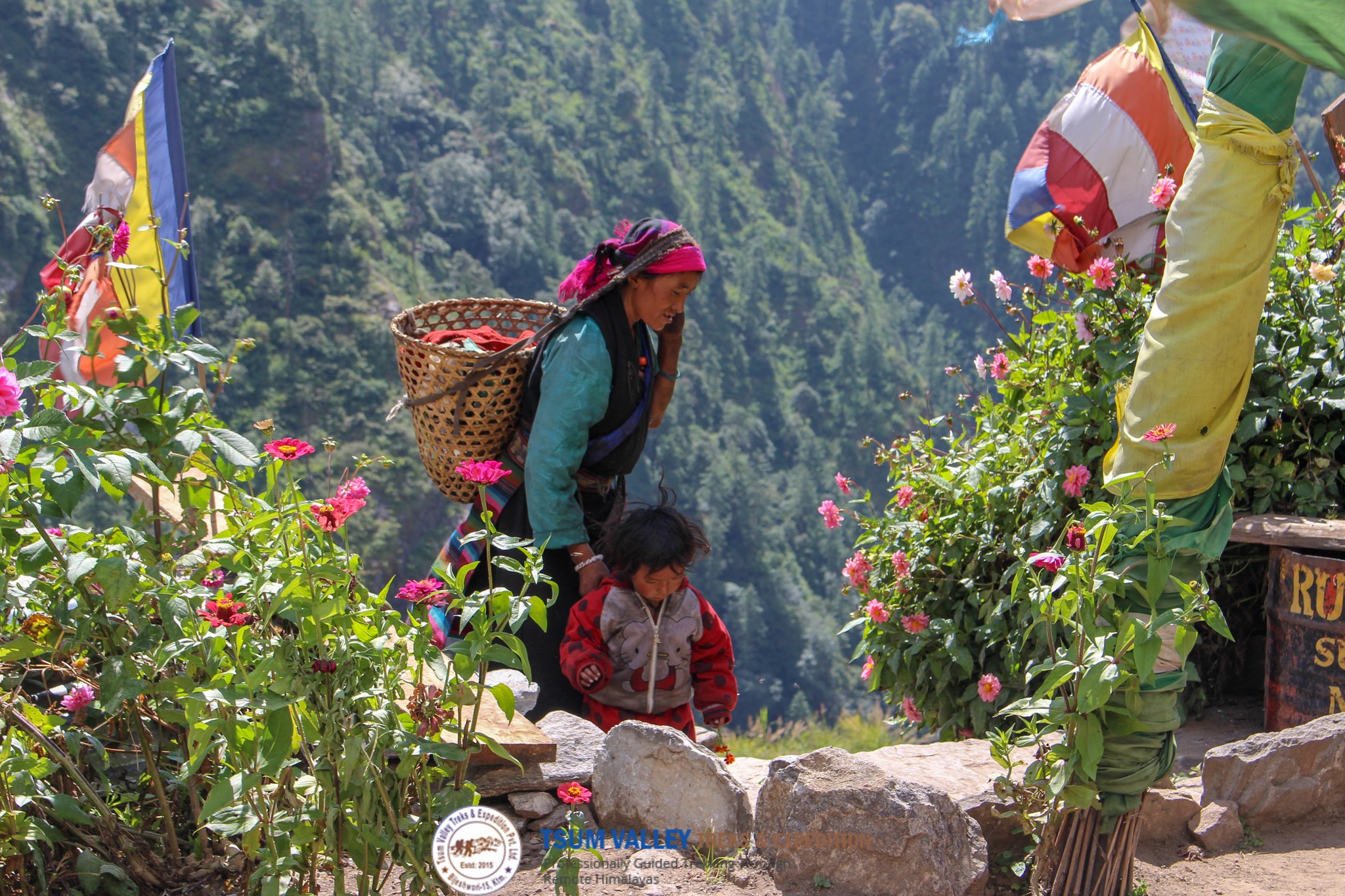
In the remote highlands of Tsum Valley, the daily life of a housewife is a rhythm of ritual, labor and craft—one that outsiders sometimes view with surprise or misunderstanding. For many visitors from the modern world, it can seem unusual that women spend most of their time on household work. This article does not judge whether that is right or wrong; it aims only to describe how a typical day might look, acknowledging that activities vary by season and by whether a family has children or livestock. What follows tries to scratch the surface of a day in the life of a Tsumba housewife, following the pattern from early morning through late at night.
Morning: waking, offerings and first tasks
Mothers are often the first in the household to wake and among the last to sleep. The day commonly begins before sunrise. In Buddhist homes, a ritual of offering fresh water to the deities is part of the early routine: women walk to a nearby water source to fetch clean water to place before the household altar. In many households, seven bowls of water are offered each morning; on auspicious days as marked by the Buddhist calendar, a butter lamp is also lit. After the offering, the housewife usually tidies the home, sweeping and arranging the living space before preparing the first food of the day.
That first meal is typically simple and nourishing. A common early breakfast is a soup made from barley flour mixed with dried cheese—a local preparation known by its Tibetan name tsamthuk. It is customary for this early meal to be served to family members who may still be in bed: the head of the household, elders and children. Once these initial duties are complete, the housewife moves on to outdoor chores that set the tone for the rest of the day.
Morning chores: water, animals and field work
After serving the early soup, she may carry out a variety of immediate chores. These can include collecting cow dung, which serves as fuel or fertilizer; preparing local alcoholic beverages; and gathering or cutting grass for the cattle. If the family keeps animals, feeding and tending them is a major responsibility. The work is highly practical: keeping livestock fed and healthy is essential to household survival.
When the sowing season has passed, women often transport loads of organic manure to nearby fields to fertilize crops. This fertilizing work is strenuous and routine—part of an agricultural cycle that depends on cooperative labor and attention to the land. Whether the day focuses more on animal care or on the fields depends on the season and the household’s particular needs.
Mid-morning to midday: a fuller breakfast and weaving
By mid-morning, the housewife will typically prepare a more substantial breakfast for the entire family. This meal often includes chapatis made from barley dough known locally as sengong. At this point, other household members are usually up and the family eats together.
Weaving and textile work are woven—literally—into the daily schedule. Many women still wear traditional dress that they make themselves; beyond clothing, they produce woolen mats and garments for male family members as well. Wool is obtained from trade links—often from markets in Kathmandu or across the border in Tibet—and women transform raw fleece into finished textiles through a sequence of skills. This process starts with cleaning and carding the wool, then spinning it into thread. The thread is woven into cloth using traditional looms and techniques passed down from one generation to the next. After weaving, the cloth is dyed and sewn into garments. Even in moments of relative rest, women may pick up the shuttle and continue weaving for their own household needs or to help neighbors.
Community labor: help and reciprocity
A central feature of life in Tsum Valley is the system of mutual assistance among households. Women frequently visit other homes to provide help. That assistance takes two distinct forms. The first is unconditional help: neighbors step in to assist a family in need with no expectation of return. This kind of aid is given freely in times of hardship or when extra hands are required.
The second form is reciprocal labor, a calculated give-and-take system. If a woman spends four days helping another household—working in the fields, tending animals, or assisting with food processing—the expectation is that the favor will be repaid with an equivalent period of service. The returning work may not mirror the original tasks exactly; measurements are pragmatic rather than literal. One household might assist with the harvest while the other later helps with cattle-related chores. This barter-like arrangement keeps the community functioning and distributes labor in a way that recognizes different household capacities.
Afternoon: cooking, childcare and household management
Most cooking responsibilities fall to the mother. Lunch preparation occupies a significant portion of the day: ingredients must be gathered, fuel prepared, and meals cooked over traditional stoves. Food preparation is not a single act but a sequence of tasks—grinding grains, simmering soups, frying flatbreads, and preparing side dishes—timed so that the family can eat together. As with other activities, the specific foods depend on what is in season and what the household produces or trades for.
Childcare and care for elders are constant demands that intertwine with other tasks. Mothers supervise children’s routines, help with basic schooling where possible, and attend to the needs of elderly relatives. Because households often span multiple generations, caregiving responsibilities are distributed but largely shouldered by women.
Afternoons may also see more weaving, mending, or other textile work. Women repair garments, finish pieces begun earlier, and prepare textiles that will be used for clothing, bedding, or trade. These activities are flexible: they can be paused to tend an animal, to receive a neighbor who needs assistance, or to prepare special food for visitors or religious events.
Seasonal variation and flexibility
The day-to-day life of a housewife differs across seasons. Planting, sowing and harvest seasons demand long days in the fields, while winter or non-planting months allow more time for weaving and indoor chores. The presence of children or cattle also shapes daily work: families with many children or large herds distribute labor differently than small households or those without livestock. The same tasks recur throughout the year, but their intensity and priority shift with the agricultural calendar.
Evening: rituals, family time and late-night work
As evening falls, religious observances may take place again at the household altar. Meals are served, and family members share the main dinner together. Evening is a time when the day’s work slows but does not necessarily stop; many women continue with tasks—finishing weaving, mending clothing, or preparing items for the next day. Social interaction with neighbors may continue into the evening, especially when cooperation on projects is ongoing.
Many housewives end the day quite late. Because they often start before dawn and interrupt lighter tasks for heavy labor, evenings can be the only time to complete sewing, weaving or record-keeping. This pattern—early rising, long daytime work, and late-night completion of domestic crafts—means that mothers are often the first awake and the last to sleep.
Skills, craft and cultural transmission
Weaving is not simply a household task but a cultural practice transmitted across generations. Mothers teach daughters and younger family members how to transform wool into cloth using traditional looms and dyeing techniques. Textile production sustains household needs and preserves cultural identity through clothing styles, colors and patterns unique to the region. The knowledge of spinning, dyeing and weaving binds families together and serves as a form of economic and social capital in the community.
Alcohol preparation, fuel collection, and animal husbandry are other skills learned within households. The ability to manage these tasks efficiently is essential for family life in a remote valley where external supplies and services are limited. Many of these skills are adapted to the environment and to the pragmatic needs of subsistence living.
Concluding note: variation, resilience and everyday normalcy
This account sketches a typical day in the life of a Tsumba housewife but does not claim to be exhaustive or universally representative. Household routines vary according to the number of children, whether the family keeps cattle, the season, and specific local customs. The aim here is descriptive: to show what a day might look like from morning to night, emphasizing the mix of ritual, domestic labor and craft that structures everyday life.
For outsiders, some aspects of this way of life may appear controversial or out-of-step with modern expectations. For those who live it, however, the pattern is a combination of cultural practice and practical necessity. It is a system built on cooperation—between family members, neighbors and generations—and sustained by skills that connect the home to the land and to long-standing traditions. The housewife’s day is therefore not merely a list of chores; it is the daily maintenance of home, faith, craft and community life in Tsum Valley.
Address
House no: 70 / 16, Ga, Sainik Awaas Marga, Bijeswori-15
Kathmandu, Nepal

