


05 / Dec / 2025
I still remember stepping into Tsum Valley last November—the air felt different, thinner yet refreshing, the kind of cold that wakes you up and makes you feel alive. I had come for the landscapes, the monasteries, and the quietness that only a remote Himalayan valley can offer. But what stayed with me the most was something I hadn’t even planned to witness: Dajyang, the traditional horse-riding festival of Upper Tsum.
It wasn’t in my itinerary. It wasn’t something I had researched.
But sometimes travel gifts you moments you didn’t expect—moments that become the whole story.
|
THE VALLEY OF 10 VILLAGES
|
|---|
Upper Tsum has 10 smaller villages:
| 1. | Chokhang |
| 2. | Dzong |
| 3. | Ngakyu-Leru |
| 4. | Ngak |
| 5. | Bhurji |
| 6. | Lar |
| 7. | Phurpe |
| 8. | Pangdun |
| 9. | Chule |
| 10. | Nyile |
Before my trip, these names were just tiny dots on a map. But once I began walking through them—past fields of barley, rows of mani walls, thin stone houses, and the ever-present sound of prayer flags flapping in the wind—they started to feel alive. Each community has its own identity, its own rhythm, and its own timing to celebrate Dajyang based on the lunar calendar.
I arrived just in time for the Dajyang of Chokang, one of the valley’s most vibrant celebrations.
|
THE FIRST SOUND OF DAJYANG
|
|---|
The morning of the festival, I was resting near a small teahouse when I heard it for the first time—a faint jingling that grew louder and clearer with every passing second. It wasn’t a bell from a monastery. It wasn’t the wind. It was something patterned, almost musical.
My host smiled and said,
“Ling-sha. The riders are coming.”
Lingsha are small bell-like decorations, each about the size of a ping-pong ball, tied in clusters to the horses during Dajyang. When the horses move together, the bells create a sound that feels like it floats across the valley. It is soft yet powerful, almost spiritual. The moment you hear it, you know something special is happening.
As the sound came closer, villagers rushed out with khatags—white ceremonial scarves—and bottles of alcohol, ready to greet the riders. Children climbed rooftops and nearby hills, while elders found the best sunny spots to sit and watch, as they had done their whole lives. Now, in the new edition, everyone is pulling out their cell phones and capturing the moments!
|
A FESTIVAL ROOTED IN TRADITION
|
|---|
Unlike the famous horse festivals of Mustang or Manang, Dajyang is not a race.
No one tries to win. Instead, Dajyang feels like a pilgrimage—a rhythmic, peaceful procession with a spiritual purpose. Each household must send one male representative, usually the father or the eldest son. It is an ancient rule. Women do not ride in the procession, as gender roles in Tsum Valley are deeply connected to their own unique spiritual responsibilities.
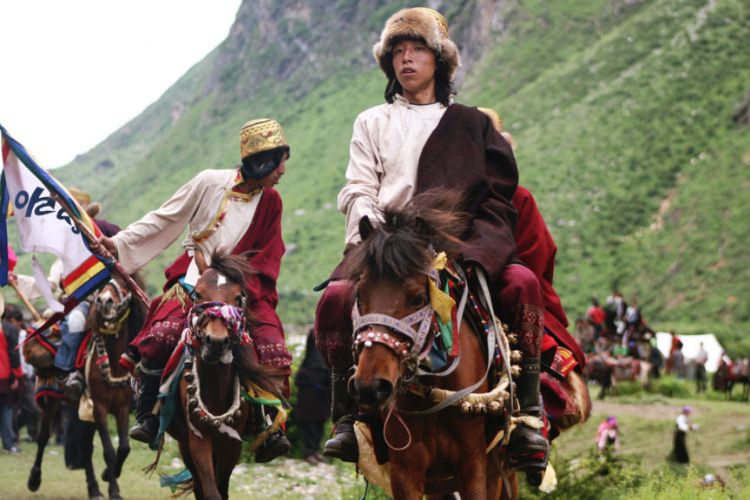
The riders, dressed in traditional clothing, move from village to village, singing songs. Their horses, decorated beautifully with traditional saddle ornaments, walk with a calm dignity—as if they know they are part of something sacred. People offer alcohol, juice, and khatags to the riders. The riders accept the offerings with a smile and a nod before continuing toward the monastery.
"Back home, ‘Driving Under the Influence’ gets you arrested—here, ‘Riding Under the Influence’ gets you more alcohol!"
It felt like watching a living tradition unfold in front of me—one that had survived untouched for centuries.
A Son With Both Parents Leads the Way
One detail that moved me deeply was this:
The son, whose parents are both alive, rides in the front.
It is believed to bring good fortune, protection, and blessings for the entire family. In a valley where life can be harsh, where winter is long, and where every family relies on one another, such beliefs carry real emotional meaning.
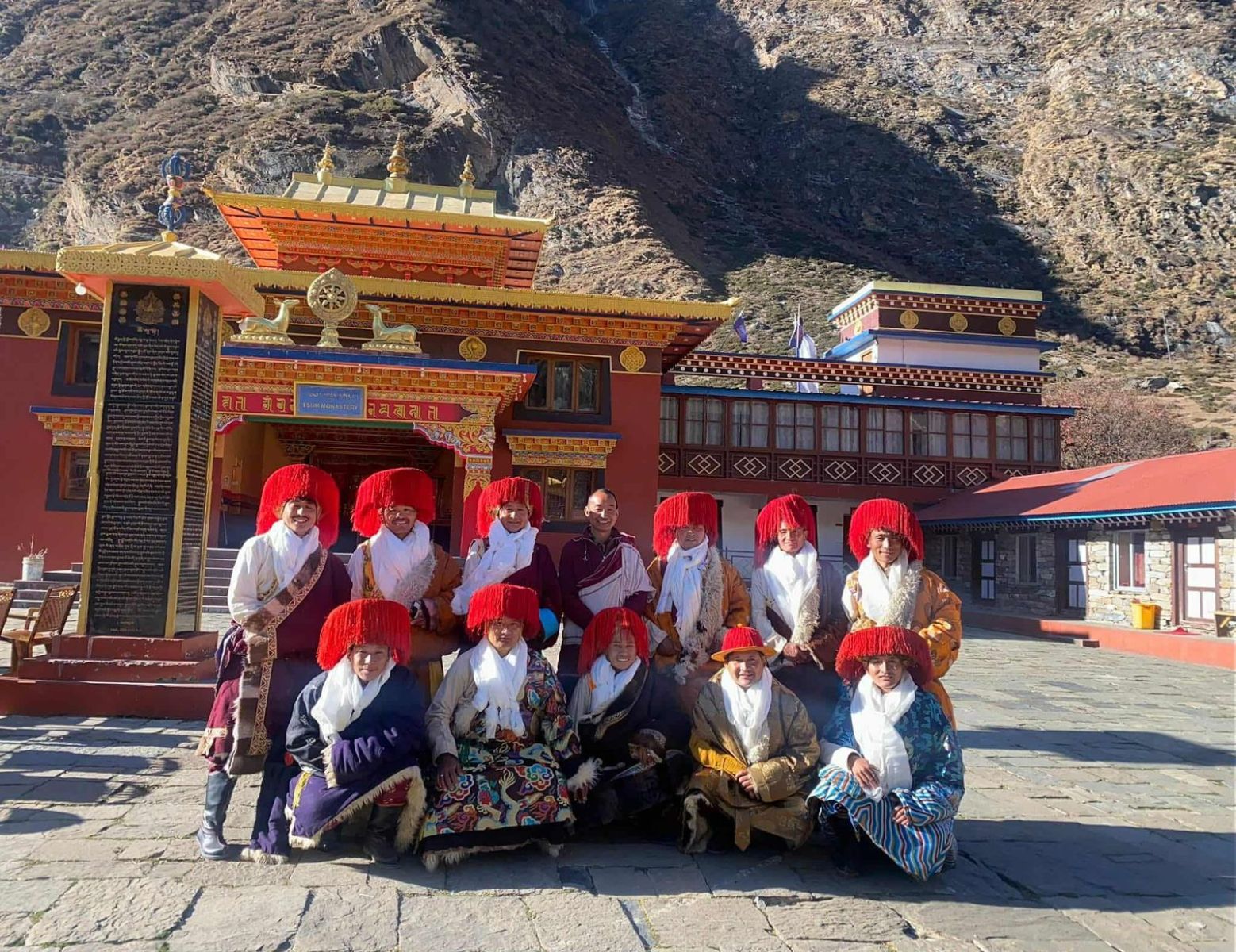
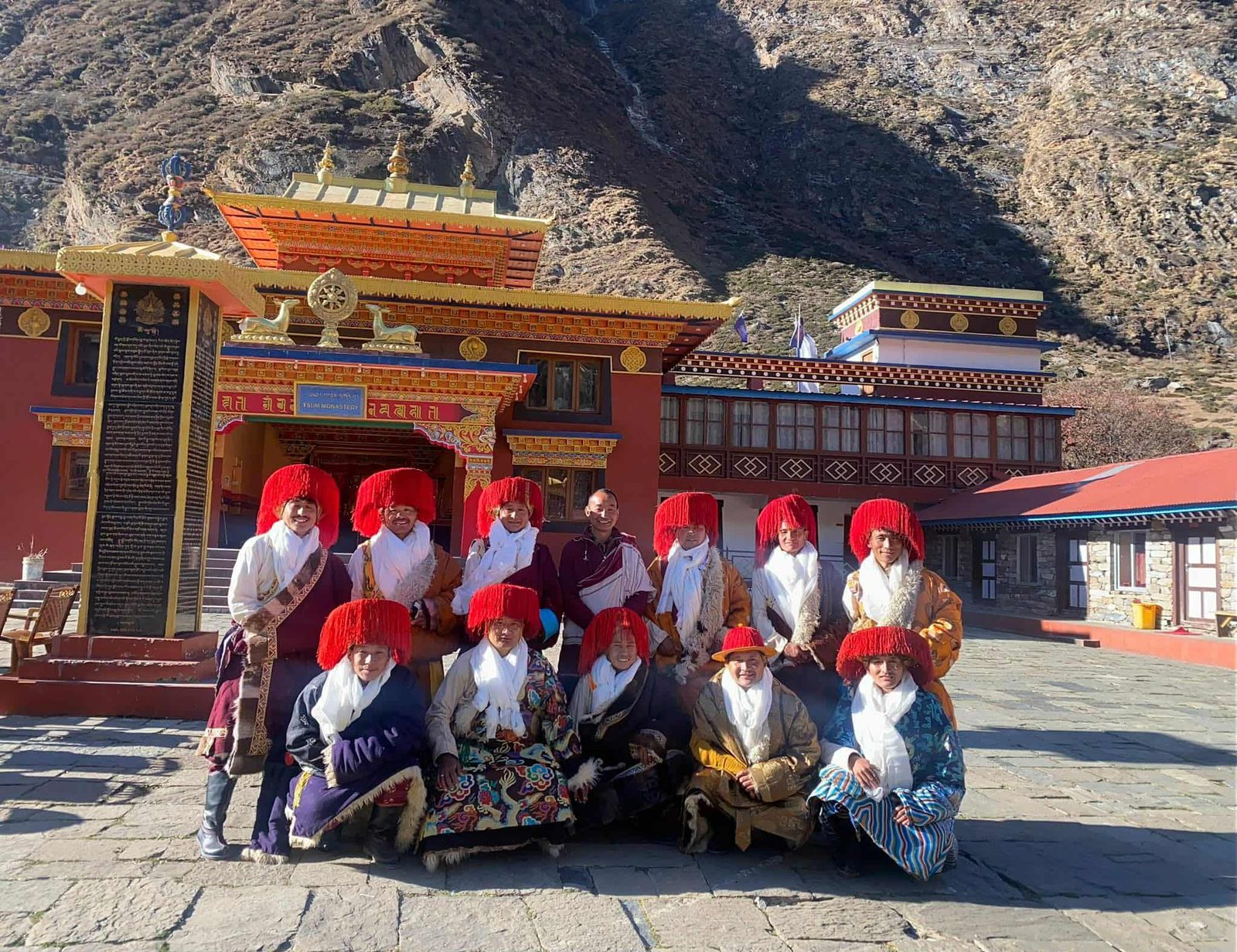
Pic: Group of rider posing infront of Tsum Monastery.
|
How Dajyang Differs From Mustang’s Yartung? |
|---|
Before coming to Tsum, I had seen photos and heard stories of the Yartung Festival in Mustang. Yartung is loud, energetic, competitive, and full of excitement. Riders race at full speed, try to pick up khatags from the ground without falling off, or break Tibetan bread using stones while riding their horses.
It’s fun, lively, and packed with adrenaline.
Dajyang, on the other hand, is gentle.
It is rhythmic.
It is spiritual.
It is a moment of community bonding instead of competition.
While Yartung celebrates the joy of summer, Dajyang honors the male guardian deity, Phola Drapla, asking for protection, health, and prosperity for the year ahead.
Travelling through the Himalayas, it’s easy to assume that all mountain festivals are similar—but Dajyang taught me that every valley has its own heartbeat.
Catching Up With the Riders at Tsum Monastery in Ngag Village (Lama Gaun)
The moment the riders left the village, I knew I had no chance of keeping up. Even though Dajyang isn’t a race, the horses move fast, and within a few minutes they were already out of sight. I continued at my normal walking pace, stopping here and there to watch the sound of their lingsha fade into the distance.
The riders had gone first to Puren Phu, the sacred Milarepa Cave, for their ritual. By the time I reached Ngag Village, they had already finished the prayers and were on their way back.
I finally met them again at Tsum Monastery, where they had gathered to take blessings. The courtyard felt busy in a comfortable, familiar way—horses waiting in a line, riders chatting, a few monks preparing the butter lamps. All the men were dressed in their traditional clothes, simple but very authentic to the valley. Seeing everyone together like that made it easy to understand how old and steady this tradition is.
After receiving the blessings, the group started singing again—just the casual, natural way people who’ve grown up together sing during festivals. Children watched from the steps, elders sat nearby, and everyone seemed to know exactly how the day was supposed to go.
I just stood there, quietly taking it in. No big moment, no dramatic scene—just an ordinary festival day in Tsum Valley that somehow felt special because I happened to arrive at the right time.
|
STORIES FROM THE PAST
|
|---|
One elder told me that, in the old days, riders carried guns, spears, and bows during Dajyang. Not to fight—but as ornaments of honor. These weapons symbolized bravery, protection, and the heritage of the community. Still, the riders carry very old swords, old guns and prayers flags.
Their clothing also carries deep cultural meaning:
During the Dajyang Festival, men wear their finest traditional attire, all of which is proudly made within Tsum Valley.
The main outer garment is the Koe, a woolen robe worn by almost every man. What makes it special is that the entire process—from spinning the wool to the final weave—happens inside the valley. It is one of Tsum’s most unique and valuable traditional products.
Under the Koe, they wear Buray, a white inner shirt made of silk and decorated with brocade patterns. For the lower part, men wear Thorma, a traditional woolen pant also produced locally.
Their footwear typically consists of sturdy leather boots.
On the head, men have three choices of traditional hats:
1. Bokto – the iconic Tibetan-style hat
2. Tsering Kyinkaf – a classic traditional male hat
3. Washa – a striking fox-tail hat
Watching the riders, I felt as if the past was walking right in front of me—alive, confident, and unbroken.
|
THE WHAT DAJYANG TAUGHT ME ABOUT TSUM VALLEY
|
|---|
In that moment, surrounded by laughter, horses, mountains, and ancient traditions, I realized something about Tsum Valley:
It is not just a trekking destination.
It is a living culture.
It is a community that has held onto its identity in a world that changes too fast.
Once the riders started heading back to the village, I walked slowly behind them, letting the faint sound of the lingsha fade with the distance. The sun was setting, and the valley turned golden. I felt grateful—grateful that I arrived at the right time, grateful that I witnessed something pure, and grateful that some traditions still survive untouched.
Dajyang wasn’t just a festival for me.
It became the memory that defines my visit to Tsum Valley.
And even today, when I think of the valley, I don’t just see mountains.
I hear bells.
Address
House no: 70 / 16, Ga, Sainik Awaas Marga, Bijeswori-15
Kathmandu, Nepal

