


.jpg)
23 / Aug / 2024
1. Origin and Meaning of the Shagya Tradition:
The Shagya Tradition in Tsum Valley has its roots in a profound cultural and religious tradition. The term "Shagya" refers to the prohibition of killing animals during the winter season, an act traditionally practiced to ensure food security throughout the year. This practice, also known as "Shetang" in the Upper Tibet dialect, included methods such as trapping or setting nets to capture animals, like deer and birds, or using other devices to hunt. In the context of domestic animals, the term "Shagya" comes from combining the verb "sha" (meaning slaughtered meat) with "gyanyi" (meaning a law or regulation), which represents the legal and moral prohibition against such practices.
The deeper meaning of "Shagya" extends to a broader prohibition of killing all living beings, whether they dwell on land, in water, or in the mountains. This includes wild animals, domestic livestock, birds, and even fish. The tradition is not merely a cultural taboo but a formal law that has been in place for more than a century in Tsum. The community, under the guidance of religious leaders, voluntarily established written agreements to uphold this prohibition, reflecting the strong Buddhist values of compassion and non-violence that dominate the region.
2. Invitation of the Previous Drukpa Rinpoche and Early Written Agreements:
The formalization of the Shagya tradition began in the 15th Rabjung (Earth-Horse year according to the Tibetan calendar, 1918 A.D.) with the visit of the previous Drukpa Rinpoche, Ngawang Palzang, to Tsum Valley. He was invited to the region by the local community, including twenty-five participants such as Ani Nyima Dolma. Rinpoche's visit was pivotal, as he granted the community empowerment, oral transmission, and teachings on Nyungney (a practice involving fasting and silence). During his stay, Rinpoche initiated the first written agreement on the prohibition of killing, which was crucial in establishing the Shagya tradition.
In 1921, Rinpoche returned to Tsum, where he was invited by the Lama of the Nyile Labrang, Sonam Gyurme, and other community members. During this visit, a more comprehensive law was established, encompassing the thirteen settlements of Tsum. This law included the prohibition of consuming garlic, onion, meat, and alcohol on specific days and outlawed the killing of all living beings. The local leaders, monastic institutions, and the general public wholeheartedly embraced these rules, leading to a formal written agreement that has become a cornerstone of the Shagya tradition.
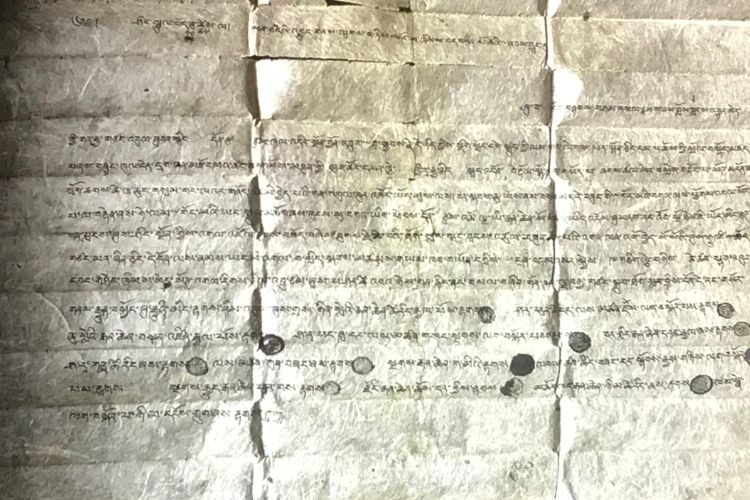
3. The Prohibition of Killing and the Restoration of the Shagya Law:
The Shagya tradition's strict adherence faced challenges during the Tibetan Communist revolution in 1959. Tibetan guerrilla forces, along with some regional Nepali security guards, violated the law by slaughtering livestock and hunting wild animals in the Tsum region. This period marked a significant decline in the observance of the Shagya tradition, which caused great distress to the current Drukpa Rinpoche.
Rinpoche made efforts to restore the law by visiting Tsum and engaging with local authorities and the community. Despite facing obstacles from government officials, Rinpoche's persistence paid off, and the law prohibiting killing was reinstated.
4. Subsequent Written Agreements and Reinforcement of the Tradition:
Several written agreements were created over the years to reinforce the Shagya tradition:
1939: An agreement was made between the previous Drukpa Rinpoche and Drakar Kargyud Tenzin Norbu. This document, signed by leaders of the upper Tsum settlements, forbade trading sheep, engaging in the meat trade, hunting, honey extraction, and killing domestic animals.
1965: Another agreement was formed to address breaches of the earlier agreements. This included penalties for violations and reinforced the prohibition of harming living beings.
1970: This agreement added further restrictions, including a prohibition on trading male and female yaks and hunting. The agreement required consultation with local authorities before engaging in any trade of livestock and emphasized the importance of respecting local laws.
1972: The law was formalized in the Nepali language, making it more accessible to the local population and aligning it with national legal standards.
1997: The agreement was revisited and upheld by local leaders, ensuring its continuity into the modern era.
2008-2012: A series of meetings and discussions led to a comprehensive written agreement in both Nepali and Tibetan languages. This document, signed by representatives of all thirteen settlements, reinforced the previous rules and introduced new regulations, including penalties for violations.
2022-2023: In conjunction with the 100-year Centennial Festival, the Indigenous Tsum Nubri community achieved legal recognition from Local Goverment for its traditional institution, Shagya. This marks a significant accomplishment for the Tsumba people and stands as one of the few instances where local traditional knowledge and customs have been integrated into local government policy. Read more here
5. Formation of the Shagya Committee:
To ensure the continuity and effective enforcement of the Shagya tradition, a dedicated Shagya Committee was formed in 2012. This committee, led by local leaders and religious figures, was responsible for overseeing the implementation of the prohibition of killing and promoting the associated Buddhist practices. The committee also played a crucial role in environmental preservation, aligning the Shagya tradition with broader efforts to protect the natural environment of Tsum Valley.
.jpg)
6. Modern Reinforcement and Legal Recognition:
In 2018, the Shagya Committee was officially registered in the Gorkha district, providing it with formal recognition and legal authority. This milestone allowed the Shagya tradition to be more firmly integrated into the local governance structure. On January 2, 2023, the law prohibiting killing, containing seven sections, was passed by the Chairperson of Chumnubri Rural Municipality, Mr. Nyima, and the Shagya Committee. This law represents the culmination of centuries of tradition, religious teachings, and community efforts to maintain the prohibition of killing in Tsum Valley.
7. The Role of the Shagya Festival Today:
The Shagya Festival is not just a celebration of the prohibition of killing but also a reaffirmation of the community's commitment to preserving their cultural and religious heritage. It serves as an occasion to educate the younger generation about the importance of compassion, non-violence, and environmental stewardship. The festival is marked by rituals, prayers, and community gatherings, reinforcing the values that have been central to the Tsum Valley for over a century.
The festival also highlights the role of local leaders, religious figures, and the broader community in upholding the Shagya tradition. It is a time for reflection on the progress made in preserving the environment and protecting wildlife, as well as an opportunity to strengthen the bonds between the settlements of Tsum Valley.
Conclusion:
The Shagya Festival is a deeply significant cultural and religious tradition in Tsum Valley. Its history reflects the community's dedication to compassion, non-violence, and environmental preservation, guided by the teachings of Buddhist leaders like the Drukpa Rinpoche. Through centuries of challenges and changes, the Shagya tradition has been maintained and reinforced, making it a unique and enduring aspect of Tsum Valley's heritage. The festival continues to serve as a powerful reminder of the community's commitment to these values and their importance in the modern world.
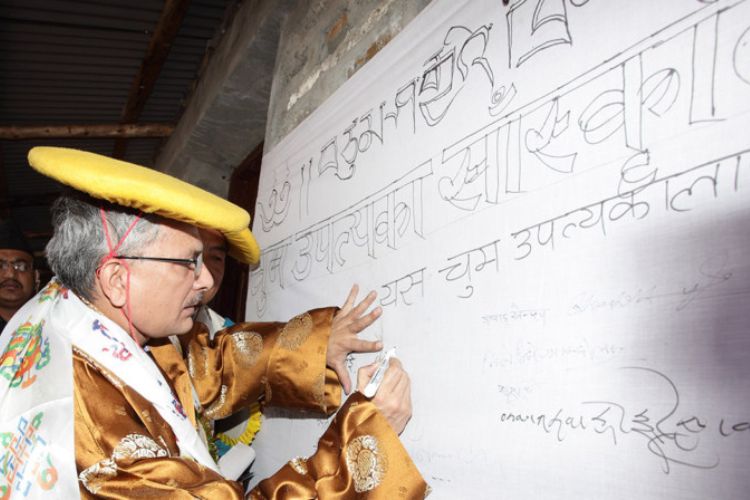
Pic: Visit of then Prime Minister Dr. Baburam Bhattarai in Shagya Festival(2012)
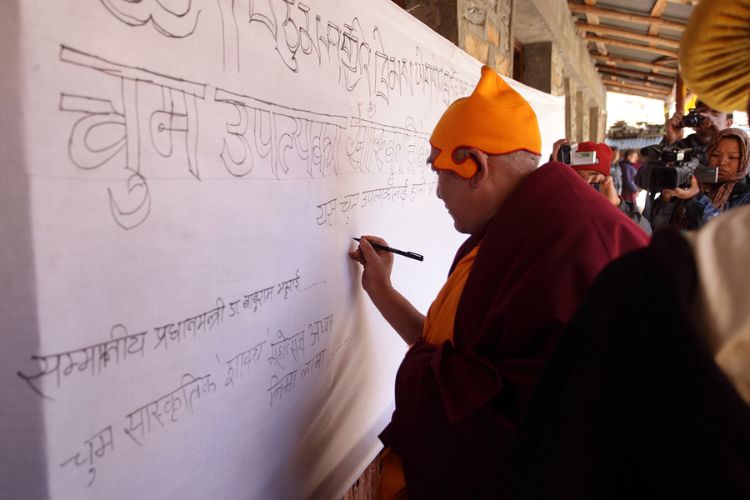
Pic: Drukpa Rinporche Ngawang Khenrab in Shagya Festival(2012)
Reference: Organizing Committee of the Tsum Shagya Centennial Festival. 2023. "Celebraring 100 years of Peace and Non-Killing of Animals(Shagya) in Tsum Valley."
Photo By: Dr. Madhu Chetri, Laxmi Prasad Ngakhusi, Hira Bahadur Chhetri, Chhang Dorje Lama, Lopsang Chhiring Lama, Dhawa Gyanjen Lama
Photo By: Dr. Madhu Chetri, Laxmi Prasad Ngakhusi, Hira Bahadur Chhetri, Chhang Dorje Lama, Lopsang Chhiring Lama, Dhawa Gyanjen Lama
Address
House no: 70 / 16, Ga, Sainik Awaas Marga, Bijeswori-15
Kathmandu, Nepal

