


Save Environment to save Tsum Valley
22 Days
Moderate
3700m
Manaslu Region
6-7 hours per day
I would like to shade light on our mission Save environment to save Tsum valley 2019 with the introduction of our company- Tsum Valley Treks and Expedition P. Ltd.
It is the local trekking company formed by local people specialized in the management of trekking in Tsum valley. The company is formed in 2015 by the local people from the valley with the objective to conduct tourism development activities in Tsum valley to :
- upgrade the economic status of the local people
- conserve local culture, values and tradition
- engage the local people in the tourism &
- motivate local people in the conservation of environment and local culture.
Tsum valley:
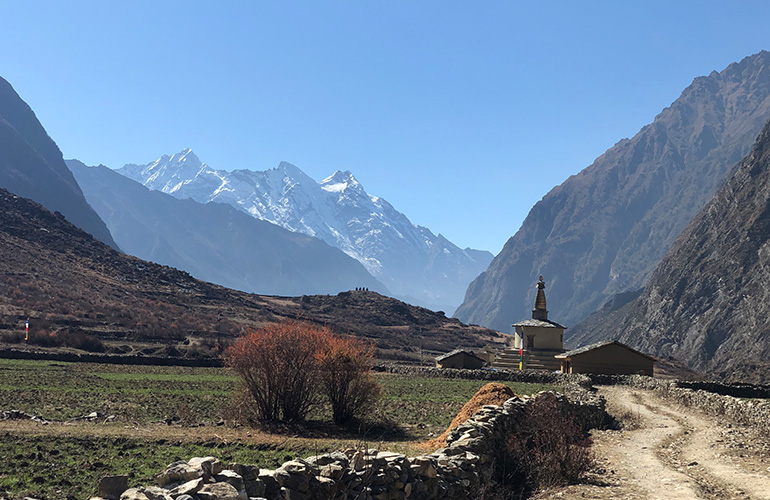
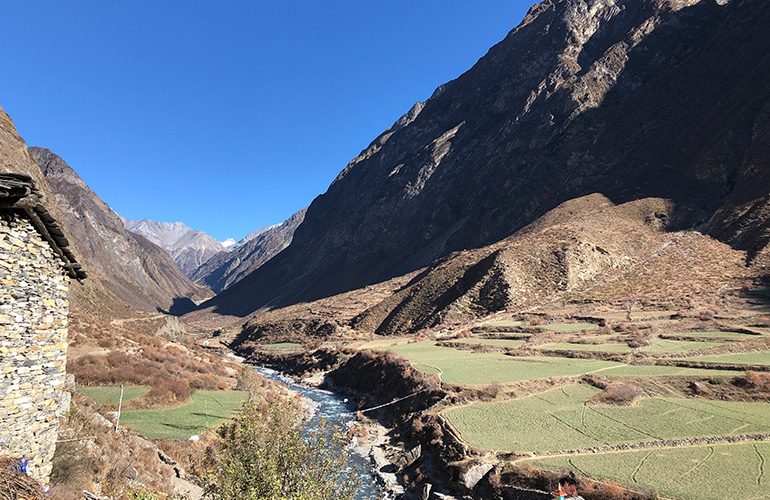
Tsum valley is a unique and sacred Himalayan pilgrimage valley located in northern Gorkha, Nepal. The majestic Ganesh himal, Sringi himal and Baudha himal are in the backdrop of this valley. The great Buddhist Yogi Chyuchin Milarapa was believed to meditate in caves of these mountains. The people of this valley follow Buddhism as religion and they worship Gautam Buddha and Padmasambhava (Guru Rinpoche). It is situated on the east of Bouddha Himal, Himal Chuli, north of the Ganesh Himal and south of the Sringi Himal. This valley is 1663 square kilometer in area and is surrounded by Ngula Dhojyang ( 5093m) in eastern direction, Thapla Pass ( 5,104m) in the western direction, Humlung Pass in the northern and Nyak in the southern direction.
Flow of tourists in Tsum valley in last five years:
Tsum valley is only the place on earth, where the sacrificing of animal is prohibited. To conserve this tradition, local people committed themselves by signing on the document that they will not kill any animal in the valley. Besides this, the valley has unique culture, values and tradition, the annual flow of the tourists in the valley is in increasing trend.
| Year | Number of Tourists |
|---|---|
| 2012 | 4268 |
| 2013 | 5331 |
| 2014 | 5658 |
| 2015 | 2287 |
| 2016 | 5745 |
With the flow of the tourist, the valley faces the challenges to conserve their culture, tradition and environment; therefore, we have decided to conduct campaign "Save environment to save Tsum valley 2019".
Tsum valley is becoming one of the major tourist destinations of Nepal. I started trekking since 2010 and trekked almost the Himalayan regions of Nepal. In my experience, I have witnessed that the increment of tourists bring positive effects as well as negative effects. The rubbish of tins, glass, plastic bags are seen everywhere in the trekking route of the valley. The beer bottles were regarded as the symbols of prosperity in the village, but nowadays they are very common. Being the responsible youth of the village, I feel it is my responsibility to address the problems related with the management of garbage in the valley. Then, I came up with the idea of doing social jobs through my newly opened new trekking company called Tsum Valley Treks and Expedition P Ltd.
There is no doubt that I want to be commercially success in my business, but being the local guide from Tsum valley, I have made my main objective of my career to conserve pristine environment and manage garbage eco-friendly. Therefore, I have decided to conduct the campaign titled Save environment to save Tsum valley 2019
Most of the Tsum people are totally unaware about management of garbage and how it affects the whole tourism economy of Tsum valley. If we are able to conduct the campaign intended mainly for the conservation of environment with the general awareness about environment, Tsum valley can be also established as the environmentally clean and safe tourist destination of Nepal.
Major problem:
The major problem of Tsum valley is how to manage the rubbish produced from hotels and shops and thrown everywhere in the village.
How to manage garbage?
We are thinking to make group of young people interested in the environment conservation activities from around the world and will trek in Tsum valley. The trekking as well as the cleaning campaign will proceed side by side and at the end of the trekking, we will safely manage the garbage collected during the trekking in presence and involvement of local people. The campaign will be conducted in coordination with local people, youth groups and mothers group.
Lessons from other tourist destinations:
The waste management in the other tourist destinations like Khumbu, Annapurna, Langtang regions is enlarging day by day. The number of tourists in Tsum valley is less in comparison to these regions, but in increasing trend, therefore, it is the right time to conduct this campaign and educate local people about the conservation of environment for the betterment of their future.
Our future plan:
We will announce another plan titled Cash for Trash after the successful completion of this program. In this project, the local people will be motivated to collect the garbage and submit us and in return, we will pay for the garbage.
Our request:
This is the first phase of program intended for the conservation of environment of Tsum valley. It is also an opportunity for the volunteers, college students to get involved in this noble program organized purely to keep Tsum valley clean, green and safe for the future generation. Since most of the people going to be involved in this program will be students and volunteers, hence, we have prepared moderate budget with standard and excellent services. After the conclusion of the program, we will award all the participants with letter of appreciation for their active involvement in the program. Therefore, I would like to request you to through the attached itinerary, cost per person, services included / excluded with this mail and let us unite and work together to Save Environment to Save Tsum Valley.
Day 01 : Arrival in Kathmandu and transfer to Hotel
We will pick up you from the airport and lead you to the booked hotel. We will share information about the trip and after that, it is your own day and can enjoy your time followed by welcome dinner.
Day 02 : City tour of Kathmandu
After breakfast, you will be taken for Kathmandu sight seen program, which includes the visit of Swayambhu temple, Hanuman Dhoka Palace, Patan Durbar Square and Bhaktapur Durbar Square.
Day 03 : Kathmandu to MAchakhola on Drive
Distance: 138km
Duration:8-9 hours
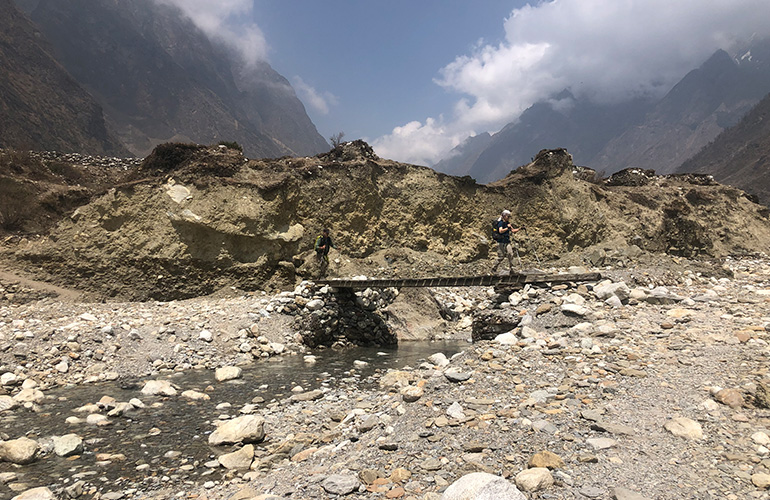
Starting from Kathmandu, it takes about 9 hours to reach Machakhola, the starting point for treks. The route passes through Arughat and Sotikhola, once common overnight stops, but with the new road extension, trekkers now continue directly to Machakhola. The trail then passes through the Gurung village of Labubesi, descends to a sandy riverbed, and follows a winding path below a steep valley before reaching Machakhola, where trekkers spend the night.
Day 04 : Machakhola-Jagat
Distance: 22 km
Duration: 7 hours
Now, the trail from Machha Khola starts to move up and down and crossing the river- Tharo Khola, we will reach Khorlabesi. If we follow the trail of more ups and downs, then we will reach hot spring called Tatopani. Again, we have to climb over another ridge and then cross Budhi Gandaki on a suspension bridge. Then there comes staircase, across a landslide and over a ridge to Dobhan. After we cross on a suspension bridge on Dobhan Khola and we climb up along the trail to Duman. Now another place will come called Yaru Khola and to reach there, we have to ascend to Budhi Gandaki. There is a suspention bridge over Yaru Khola and after crossing over it, we will have to climb more to reach Tharo Bharyang. Crossing to the west bank of Budi Gandaki and then trekking more lead us to the place called Jagat, office of Manaslu Conservation Area Project (MCAP) and police check post.
Day 05 : Jagat to Lokpa
Distance: 18 km
Duration: 7 hours
We will be at Salleri within 30 minute we leave Jagat from where we can the range of Shringi Himal. We will be crossing long bridge and ascend Philim, which is a major village of Tsum valley located on a small plateau. It has a check post of Manaslu Conservation Area Project, a school funded by Japan, community health post and small hydro plant. We will find farmland, which looks beautiful and it is ahead of Philim and then we trek a village called Ekle Bhatti. Now, the valley becomes narrow and scene of waterfall is juts excellent. Then, we will follow the trail for about two and half hours to cross a bridge made of metal over Budhi Gandaki. If we take left turn of the trail, we will be doing Manaslu circuit, but we will take right to catch the trail, which will take us to Tsum valley towards narrow valley of Syar Khola. We will be surrounded by beautiful landscapes when we are at the top of Lokpa and we can also see nice view of beautiful mountain- Ganesh Himal.
Day 06 : Lokpa to Chumling
Distance: 11 km
Duration: 5 hours
The trekking trail from Lokpa to Chumling is challenging and tough. It goes up and down through a dense forest. We will have to follow the path along Shia Khola before we climb up and down in a dense forest of pine trees. We will go down slowly to the rives, walking over the cantilevered metal bridge fixed at a cliff face. Tsum valley was remained completely isolated for few months in 2016 after the river sliced down this section. There is a suspension bridge fixed over Syar Khola, which we have to cross to reach Chumlin. It is one of the Buddhist village of this region with old monastery, traditional houses, stone paved streets and mani walls. It also has one school, a small clinic, prayer flag and this villages gives immense feelings of Buddhism culture and tradition.
Day 07 : Environment Cleanup campaign
Day 08 : Chumling to Chokhangparo
Distance: 10 km
Duration: Approximate 6 hours
Our next destination is Chokangparo and it is five hours trekking from Chumling. On the trekking, we will have the refreshing view of Lumbo peak, Himal Chuli, Ganesh Himal I, II and IV. Going through the dense forest of pine tree, the trek is quite difficult because of the long, unrelenting uphill to Chopangparo. Walk past Rainjam to Serpu Khola crossing another bridge we arrive at the Gho Village. Crossing over the bridge o Serpu Khola, we arrive at Gho village. We have walk another 2 hours to climb Tsum and we will be at the village named Chhokangparo. If the weather is good, then we can have fantastic view of Himalchuli and Ganesh Himal. We will spend our night at Chhokangparo.
Day 09 : Environment Cleanup campaign
Day 10 : Chokhangparo to Lama Gaun
Distance: ~3 km
Duration: Approximate 3 hours
We may face altitude problem while going up from Chhkamparo, therefore, we need to be careful. The trek will be short. We will stop at Lama Gaun and will be introduced to Compassion Project. Compassion project is a health and education initiative of Ngak Labrang supported by various INGOs and NGOs.
Day 11 : Awareness & interaction program with students followed by cleanup program
Day 12 : Awareness & interaction program with students followed by cleanup program
Day 13 : Lama Gaun to Nile (3,500m/12,174ft): 3 hours
Distance: ~6 km
Duration: Approximate 3 hours
From Lamagaon, after crossing suspension bridge, we will arrive at Rachen Gumba. This Nunnery Gumba was established in 1905 and it has 1000 terracotta images of Avalokiteshowra. It also has images of other gods, goddesses and gurus related with Mahayan Buddhism. The interior of Rachhen Gumba is very impressively painted with stories related with Buddhism. If we are interested to vist the gumba and then we can visit there. Then crossing Shiar Khola and we continue our trekking through the villages – Lar, Phurbe and Pangdun. We can also see historic stupa of Buddha on the way to another village – Chhule and climbing up, crossing the bridge and then we will be at Nile.
Day 14 : Environment Cleanup campaign
Day 15 : Nile - Mu Gumba(3700m) to Lama Gaun
Distance: 8 km
Duration: Approximate 2 hours
After doing breakfast at Nile, we will move towards Mu Gompa. It will take two hours to get there from Nile and is the last village of Tsum valley located above Syar Khola. While exploring the monastery, we will have opportunity to learn about Buddhism through religious books. The statues of Avalokiteshwara, Guru Padmasambhava and Tara will refresh us and we will forget our tiredness. The scenery of Longnang glacier and pasture of yak cannot be described in words. Another historic monastery we can visit is Dhephu Doma Gompa, which is considered 600 years old. It has safely preserved ancient thankas. From Mu Gumpa, the view of Ganesh Himal is excellent. We will trek back to Lama Gaon.
Day 16 : Lama Gaun -Chumling
Day 17 : Chumling to Philim (1,570m/5,103ft): 6-7 hours
Day 18 : Philim to Khorlabesi (970m/3182ft: 6-7 hours
Day 19 : Khorlabesi to Machakhola (700m/2,296ft): 7 hours
Day 20 : Machakhola to Arughat to Kathmandu (600m/1,968ft): drive 7-8 hours
Day 21 : Flexible day
Inclusion
- Kamandu/Arughat/Katmandu by private Bus
- Airport pick up/ drop
- 3 nights Accomodation in Kathmandu on BB
- 19 days of Tea House in full board (AP plan) (except beverage, mineral water, beer. coke etc.)
- Trek Leader
- Porters: 1porter :2 trekker or (Carried by mules)
- Special permit for Tsum Valley
- MCAP Entrance Ticket
- Insurance for all Nepalese team
Exclusion
- Meal and Accomodation in Kathmandu
- Flight international
- Personal insurance (Should be covered helicopter evacuation incase of problem on the trek and medical also)
- Beverage (beer, mineral water etc)
- Tips
- Entry visa for Nepal
- Local transport in Katmandu
- Entrance fees in Katmandu (Monasteries, museum and monuments)
Note
We shall not be responsible for any changes and alterations in the itineraries due to avoidable circumstances i.e. landslide, road blockage, floods, snowfall, political unrest, cancellation of flights, delay arrivals, sickness or accidents and any extra cost incurring there of shall be borne by the clients themselves at the spot. It is most advisable for clients to have full INSURANCE against medical and personal accidents.
* a more detailed list will be sent after booking